There’s a very specific silence that follows noise.
Not awkward silence.
Not peaceful silence.
A hollow one.
You’ve just finished something big.
An exhibition launch.
A major project unveiling.
A public event with conversations flowing and lights bright and adrenaline high.
You’ve shaken hands.
Given the speech.
Answered questions.
Smiled for photographs.
You’ve been present. Alert. Switched on.
And then it ends.
The room empties.
The banners come down.
The last guest leaves.
You get home.
And suddenly, everything is quiet.
Too quiet.
The post-event crash is not dramatic.
It’s subtle.
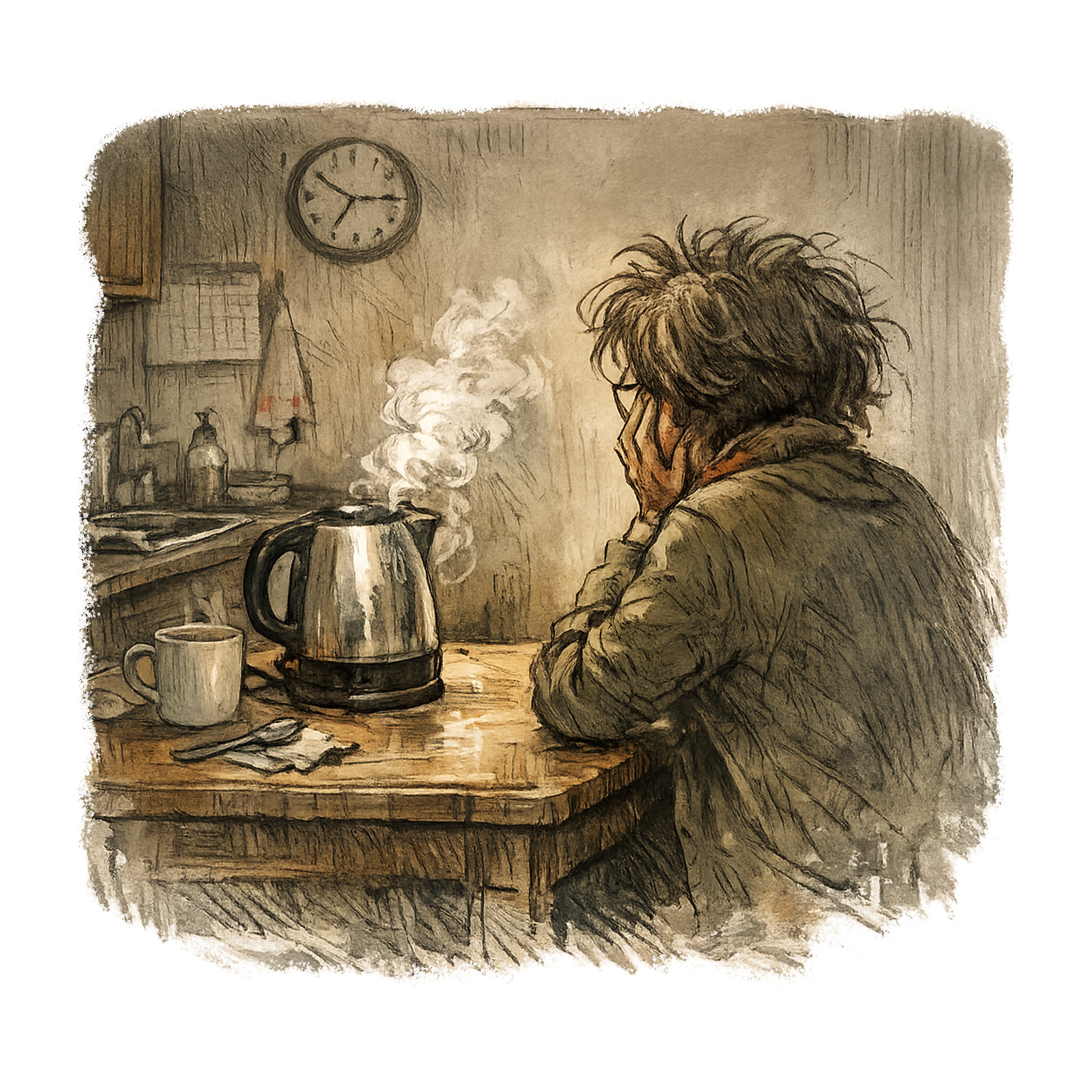
It’s sitting at your kitchen table staring at a kettle like it might explain something.
I have genuinely stood in my kitchen after a launch, watching water boil, feeling slightly disoriented.
Twelve hours earlier, I was speaking in a large space, engaging with people, feeling purposeful.
Now I’m deciding whether to have another cup of tea.
Adrenaline fades quickly.
That’s the physiological truth.
You’ve been heightened — socially, emotionally, mentally.
Your body has been in performance mode.
Even if the performance was sincere.
Even if the conversations were meaningful.
Heightened is heightened.
Then it drops.
The emotional comedown is real.
No one applauds the quiet kitchen.
No one is asking questions.
No one is leaning in.
And your nervous system hasn’t recalibrated yet.
It’s still expecting stimulus.
So when it meets stillness, it feels strange.
The emotional core here is sudden quiet.
After intensity, quiet can feel like absence.
Almost like loss.
You move from centre-stage presence to solitary normality within hours.
And that shift is jarring.
I remember one particular project launch that had been building for months.
Interviews conducted.
Portraits edited.
Layouts refined.
Invites sent.
The evening itself was strong.
Thoughtful conversations.
Visible engagement.
A sense of completion.
Driving home, I felt energised.
Grateful.
Relieved.
Then the next morning, the energy was gone.
Not because anything had gone wrong.
Because the event was over.
There’s something about finishing a large piece of work that leaves a vacuum.
You’ve been oriented toward it for weeks.
Maybe months.
It’s been the mental headline.
And once it concludes, your brain has no immediate replacement.
The crash isn’t depression.
It’s recalibration.
But if you don’t understand that, it can feel unsettling.
You start asking questions.
Was that it?
Is this the peak?
What now?
It’s not dissatisfaction.
It’s adjustment.
Your system has been running high.
Now it’s idle.
Idle feels wrong at first.
The comedy edge of this is how disproportionate it can feel.
You move from giving a speech in a historic building to standing in a supermarket queue wondering what just happened.
From answering questions about impact to choosing between two brands of cereal.
Life doesn’t elevate permanently because you had one elevated evening.
And part of you knows that.
But part of you expected a shift.
A lasting sense of lift.
Instead, there’s normality.
And normality feels anticlimactic.
There’s also an identity element.
During events, you are visible.
You are the organiser. The photographer. The storyteller.
Afterwards, you’re back to admin.
Emails.
Follow-ups.
Logistics.
The spotlight turns off abruptly.
That sudden shift can create a temporary dip in self-perception.
Not insecurity.
Just flatness.
When I first noticed the post-event crash, I interpreted it incorrectly.
I thought it meant something was wrong.
That maybe the event hadn’t meant as much as I thought.
That maybe the impact was overstated.
In reality, it was biology.
Adrenaline and cortisol spike during performance.
They fall afterwards.
The body doesn’t care that the performance was meaningful.
It responds the same way.
But meaning complicates it.
Because when the event carries emotional weight — stories of dementia, addiction, domestic abuse — you’re not just performing.
You’re holding space.
That holding requires focus.
Focus requires energy.
Energy drains.
And when it drains, the quiet feels heavier.
There’s also exhaustion hidden inside the crash.
Not obvious exhaustion.
Not collapse.
Subtle depletion.
You might feel slightly irritable.
Or oddly detached.
Or simply tired in a way that sleep doesn’t immediately fix.
Recovery needs structure.
That’s the shift I’ve had to learn.
You don’t just bounce back from intensity.
You transition.
Early on, I didn’t plan for that.
I’d schedule back-to-back commitments around launches.
Meetings the next morning.
Editing sessions immediately after.
As if the event was just another task.
But it’s not.
It’s a peak.
And peaks require descent.
Now, I build margin after large events.
No major meetings the next morning.
No immediate creative deep dives.
Time to decompress.
Time to walk.
Time to let the nervous system settle.
Because if you ignore the crash, it accumulates.
Multiple intense events without recovery create cumulative fatigue.
And cumulative fatigue looks like burnout later.
The kettle moment has become almost symbolic for me.
That quiet kitchen after noise.
Instead of resisting it now, I recognise it.
This is the drop.
It’s normal.
It doesn’t mean the event didn’t matter.
It means the body is recalibrating.
I also avoid immediately chasing the next high.
That’s a temptation.
You feel flat, so you look for the next big thing.
Another launch.
Another announcement.
Another visible moment.
But stacking peaks without valleys is unsustainable.
Consistency matters more than moments.
And consistency requires recovery.
There’s something grounding about ordinary tasks after extraordinary evenings.
School runs.
Emails.
Walking the dog.
They remind you that identity is not tied to spotlight.
It’s tied to steady presence.
The post-event crash softens when you accept that rhythm.
Intensity.
Completion.
Quiet.
Reset.
That’s healthy.
The mistake is interpreting quiet as failure.
Quiet is not failure.
It’s processing.
It’s the system settling.
I’ve started debriefing myself gently after major events.
Not formally.
Just reflecting.
What went well?
What did I learn?
What needs follow-up?
It gives closure.
Without closure, the mind keeps replaying.
And replaying prolongs the crash.
The purpose shift here is practical.
Recovery needs structure.
Just like preparation did.
You plan the event carefully.
You should plan the aftermath too.
Rest is not indulgence.
It’s maintenance.
There’s something mature about understanding that highs are temporary.
They are not meant to sustain you daily.
They are markers.
The work between them sustains you.
The crash doesn’t signal decline.
It signals transition.
Now, when I find myself staring at the kettle after a major launch, I smile slightly.
Because I recognise the pattern.
Noise to quiet.
Energy to stillness.
It’s not loss.
It’s rhythm.
And rhythm is healthier than permanent intensity.
The event mattered.
The conversations mattered.
The stories mattered.
And the quiet afterwards matters too.
Because without quiet, you can’t hear what’s next.
And what’s next is rarely dramatic.
It’s steady.
And steady builds more than spikes ever will.
How to find this article: